
Two boys rescued from Venezuela earthquake rubble after days of being trapped
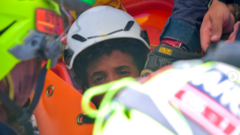
Two 11-year-old boys rescued from Venezuela earthquake rubble
Following the catastrophic magnitude 7.2 and 7.5 earthquakes that struck Venezuela on Wednesday, rescue teams have achieved a remarkable feat by extracting two 11-year-old boys alive from the debris. These miraculous rescues, occurring days after the initial tremors, have provided a glimmer of hope amidst a deepening national humanitarian crisis that has already claimed at least 1,450 lives.
Background / Context
The dual earthquakes hit northern Venezuela on Wednesday, causing widespread structural failure and trapping thousands of citizens under concrete and twisted steel. The coastal region of La Guaira has emerged as the hardest-hit area, where the town of Caraballeda has become the primary hub for emergency response efforts. A local golf course, once a site of leisure, now serves as a critical makeshift hospital and humanitarian aid distribution center, housing families who lost their homes.
International aid has begun to flow into the country, with teams arriving from Mexico, Spain, Qatar, the United States, and the United Kingdom. According to the United Nations official Tom Fletcher, approximately 39 search and rescue teams—totaling nearly 2,000 personnel—are currently utilizing advanced technology, including micro-drones designed to navigate narrow voids in rubble, to locate survivors. Despite the influx of global support, many residents remain frustrated by the pace of debris removal in towns like Caribe and Tanaguarena.
Key Developments
- An 11-year-old boy named Moises was successfully pulled from 3 meters of debris after a six-hour high-precision rescue operation.
- A second 11-year-old boy was rescued hours later in Caraballeda, as confirmed by interim President Delcy Rodríguez.
- The official death toll currently stands at 1,450, with tens of thousands of people remaining unaccounted for across the impacted regions.
- Survivors are grappling with ongoing aftershocks and psychological trauma while living in temporary encampments at airports and open public spaces.
Analysis
The rescue of these two children serves as a poignant symbol of resilience for a nation struggling to cope with the sheer scale of the disaster. While the government has mobilized the armed forces to distribute medicine and food, the reliance on manual labor in many neighborhoods underscores the desperate need for heavy machinery that has yet to reach the most isolated affected zones.
Furthermore, the psychological toll on the survivors is profound. Residents report frequent symptoms of vertigo and acute anxiety, often misidentifying minor vibrations as further seismic activity. This underscores the secondary crisis currently unfolding: a desperate need for long-term mental health support to accompany the immediate search and rescue operations that continue to dominate the local agenda.
What This Means
For the thousands of families still waiting for news of their loved ones, these rescues provide a tangible reason to maintain hope that survivors can be found even after several days trapped without access to food or water. The focus for the international community must now shift toward accelerating the delivery of heavy equipment to clear the thousands of buildings that currently prevent rescuers from reaching trapped individuals.
Conclusion
As the search efforts continue, the nation remains focused on the survival of its most vulnerable citizens in the wake of this historic tragedy. The successful extraction of these boys serves as a reminder of the critical importance of sustained international support during the coming weeks of recovery.