
Mazda Suggests The Next Miata Will Be The Last To Use A Gas Engine
Mazda Suggests The Next Miata Will Be The Last To Use A Gas Engine
The iconic Mazda MX-5 Miata is approaching a historic transition as the company prepares to overhaul its lightweight sports car for a new era. Recent reports suggest that the upcoming fifth-generation model will likely be the final iteration to utilize an internal combustion engine, marking a significant milestone in automotive history.
Background / Context
The current ND generation of the Mazda Miata has been a staple of the automotive world for over a decade, maintaining its status as a benchmark for lightweight, driver-focused performance. Despite its venerable age in an era dominated by rapid technological turnover, the car's back-to-basics formula remains highly popular among enthusiasts who value an analog driving experience.
Mazda Europe Design Director Jo Stenuit previously confirmed that the next-generation roadster will take a few more years to reach the global market. As emissions regulations tighten across the globe, the manufacturer is forced to balance its heritage of driving pleasure with the harsh reality of environmental compliance, leading to this difficult transition toward electrification.
Key Developments
- Mazda Australia CEO Vinesh Bhindi cited internal company information indicating the upcoming fifth-generation MX-5 will likely be the last vehicle in the lineage with a gas-powered engine.
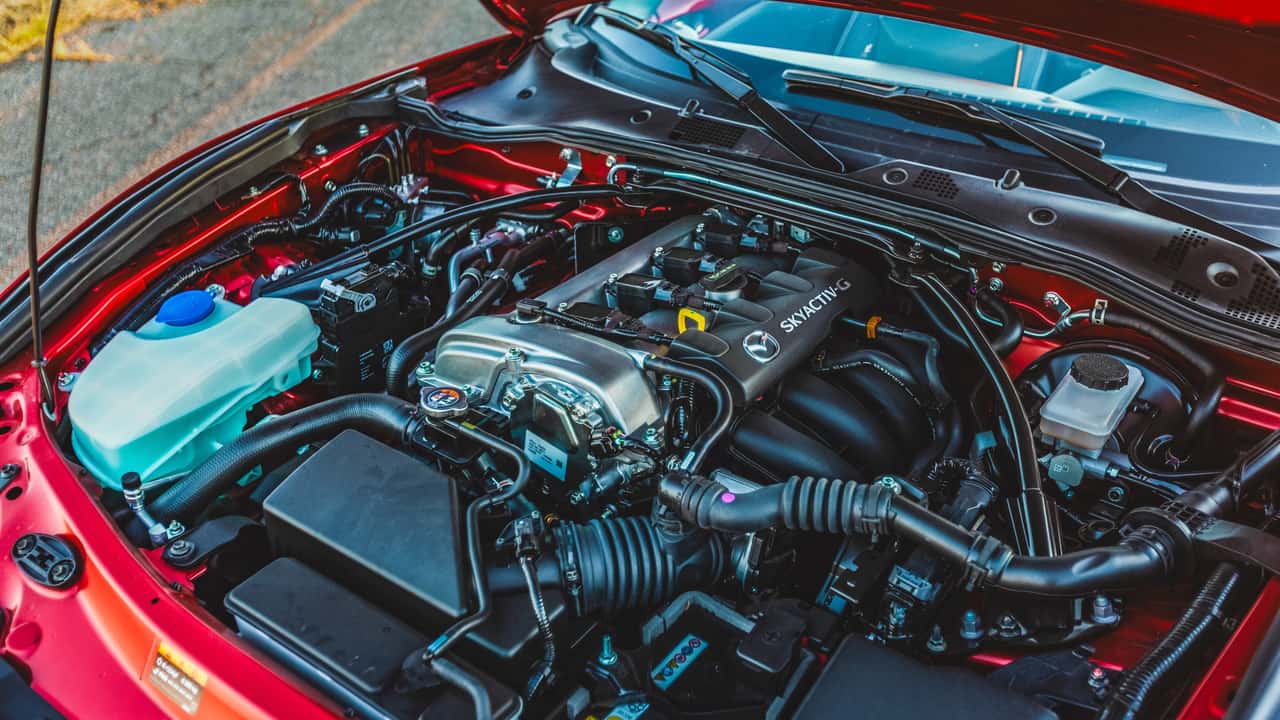
- The upcoming generation is expected to utilize a larger, naturally aspirated 2.5-liter engine from the new Skyactiv-Z family, maintaining a focus on rear-wheel-drive dynamics.
- Mazda aims to keep the total vehicle weight under 1,000 kilograms, or 2,204 pounds, a challenging goal given the increasing requirement for advanced safety features.
- Production of the new roadster is not expected to begin before 2028, as the Skyactiv-Z engine technology is slated for its initial rollout in a hybrid CX-5 model in late 2027.
Analysis
The shift toward an electric future presents a existential challenge for a vehicle as beloved for its mechanical purity as the Miata. By opting to utilize the larger Skyactiv-Z powertrain for one final generation, Mazda is attempting to bridge the gap between traditional combustion performance and future regulatory standards. This strategy acknowledges that while the future is electric, there is still demand for a pure, driver-focused combustion vehicle before the market moves entirely toward battery-electric alternatives.
Furthermore, the long product life cycles characteristic of the Miata line, spanning over a decade for both the NC and ND generations, suggest that this final internal combustion model could persist well into the 2030s. This extended timeline offers a vital window for enthusiasts to experience one last authentic gas-powered sports car from the manufacturer, even as the brand faces pressure to meet strict European CO2 emission targets.
What This Means
For the average consumer, this announcement underscores the limited time remaining for new, lightweight combustion-powered sports cars. While Mazda remains committed to preserving the Miata's DNA, the move toward electrification appears inevitable, driven by global mandates and a need to reduce carbon footprints. The focus will now shift to whether the next generation can retain its signature lightweight handling while integrating necessary hybrid components or electric assistance.
As the industry pivots away from fossil fuels, the Miata stands as a test case for how a legacy brand can honor its history while adapting to modern mandates. Whether or not the model succeeds in its goal of keeping the traditional sports car spirit alive remains a primary concern for the brand's engineering and design teams.
Conclusion
The next-generation Mazda Miata will represent a definitive turning point, serving as the final bridge between the analog heritage of the past and a new electrified future. Enthusiasts and industry observers alike will be watching closely as Mazda attempts to maintain its legendary driving formula in the face of inevitable change.