
Venezuela earthquakes kill 920 people as international rescue teams arrive
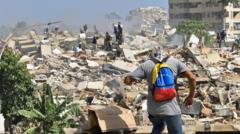
Venezuela Earthquake Tragedy: 920 Confirmed Dead Amid Massive Rescue Operations
A series of powerful earthquakes has devastated northern Venezuela, resulting in 920 confirmed fatalities and over 3,360 injuries as international rescue teams race against time to pull survivors from the wreckage. The disaster has crippled critical infrastructure, leaving families desperate for news while authorities struggle to manage the mounting scale of the catastrophe.
Background / Context
Two massive tremors struck the country on Wednesday, with the second quake reaching a magnitude of 7.5—the strongest to hit the region in a century. The seismic activity centered on the northern coastline, specifically affecting La Guaira, Caracas, Aragua, Carabobo, and Falcón. The government confirmed that over 214 aftershocks have rattled the region since the initial quakes, complicating rescue efforts and creating a climate of pervasive fear among residents.
The country was already grappling with a fragile infrastructure before the disaster, a result of decades of limited investment and persistent economic instability. Surviving medical facilities are reported to be completely overwhelmed, with medical professionals stating that existing shortages of medicine and equipment have made providing adequate care to the thousands of injured citizens nearly impossible during this crisis.
Key Developments
- The official death toll has reached 920, with government officials confirming that at least 172 people remain trapped under the rubble of collapsed buildings.
- A total of 39 search and rescue teams from across the globe have been deployed, including specialized personnel from the United Kingdom, the United States, the Netherlands, Mexico, and Switzerland.
- The United States has pledged $150 million in aid and has deployed naval assets and transport planes to assist with the logistical response.
- Despite the devastation, there have been miraculous survival stories, including the rescue of three siblings in La Guaira who were pulled from debris on live state television.
Analysis
The humanitarian response currently faces extreme challenges due to the collapse of local transportation links and damaged telecommunications networks. International experts, including Jan Egeland of the Norwegian Refugee Council, have highlighted how the nation's pre-existing economic crisis exacerbated the vulnerability of its residential and public structures. Without modern earthquake-resilient engineering, hundreds of shopping centers, hospitals, and homes were unable to withstand the force of the 7.5 magnitude tremor.
Furthermore, the disaster highlights the severe limitations of local emergency services, which have been heavily reliant on the surge of nearly 2,000 international personnel and advanced search technology, such as "cockroach drones." The effectiveness of the long-term recovery will largely depend on the sustained commitment of the international community to fill the significant resource gaps left by the local government's inability to manage such an immense logistical burden on its own.
What This Means
The disaster arrives at a period of acute political and social volatility for Venezuela, occurring less than six months after the arrest of former leader Nicolás Maduro and his subsequent transfer to the United States on charges of drug trafficking. The current acting leadership, led by Delcy Rodríguez, now faces the monumental task of coordinating recovery efforts while managing public frustration over the state's failure to provide adequate disaster preparedness or rapid emergency support.
If the death toll continues to rise, the pressure on the current administration will intensify, potentially leading to further social unrest. For the survivors, the focus remains on the immediate search for missing loved ones, while the nation begins to confront the reality of rebuilding its already strained economic and physical infrastructure.
Conclusion
The international community remains focused on the critical 72-hour window as search teams continue to work tirelessly through the rubble in coastal regions. With voices falling silent in the debris, the mission has evolved into a desperate race against both time and the physical destruction of the country's north.