
US Lifts Naval Blockade as Iran's Supreme Leader Critiques Deal
US Lifts Naval Blockade as Iran's Supreme Leader Critiques Deal
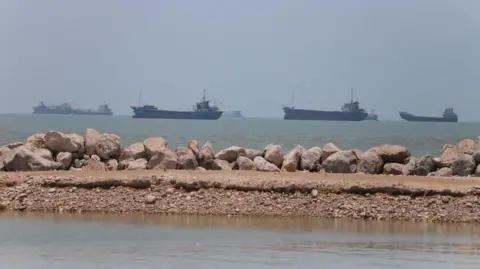
The United States has officially lifted its naval blockade of Iran following a significant bilateral deal aimed at ending the ongoing conflict in the Middle East. While the agreement signals a major shift in military operations, Iranian Supreme Leader Mojtaba Khamenei has expressed public skepticism, claiming the deal was signed by Donald Trump "out of desperation."
Background / Context
The naval blockade had been a focal point of the conflict, with the US Central Command confirming its cessation "in accordance with the President's direction." This move represents a strategic pivot intended to facilitate a broader ceasefire across all military fronts. The regional war had intensified following the death of Ayatollah Ali Khamenei in February, which prompted the current Supreme Leader Mojtaba Khamenei to take office amid ongoing tensions.
Despite the cessation of hostilities, the diplomatic atmosphere remains fragile. Khamenei noted that he held a "different view" regarding the agreement, asserting that while he allowed the deal to proceed following assurances from President Masoud Pezeshkian, it does not signify an acceptance of the opponent's position. US Vice-President JD Vance has taken a firm stance, emphasizing that Iran will receive no financial benefits or sanctions relief until it fully complies with the memorandum of understanding, including the destruction of its enriched uranium stockpile.
Key Developments
- The US has officially ceased enforcement of the naval blockade near Iran to foster peace negotiations.
- Supreme Leader Mojtaba Khamenei publicly described the deal as a product of Donald Trump's "desperation" while confirming he authorized the move for the sake of national goodwill.
- The agreement mandates an immediate halt to military operations on all fronts and the reopening of the Strait of Hormuz.
- Vice-President JD Vance confirmed that a 60-day period of technical negotiations is now underway, with potential meetings in Switzerland.
- Although the agreement has been signed, localized fighting between Israel and Hezbollah has persisted, as Hezbollah has formally rejected the terms.
Analysis
The deal represents a high-stakes gamble for the Trump administration, which seeks to stabilize the Middle East without providing immediate concessions to a historical adversary. By tying financial relief strictly to compliance, the US is attempting to create a verification-first framework that holds Iran accountable for its regional influence and nuclear ambitions. However, the internal dissent within Iran and the ongoing conflict involving Israel and Hezbollah suggest that the path to a lasting peace remains fraught with complications.
For the Israeli government, the deal has prompted mixed reactions. While Prime Minister Benjamin Netanyahu has prioritized the importance of the US-Israel alliance, members of his cabinet have voiced concerns. JD Vance responded to these criticisms by urging cabinet members to "wake up and smell the reality" regarding the necessity of a unified strategic approach, noting that Israel should not alienate its most significant global partner.
What This Means
The immediate cessation of the blockade marks the end of a critical phase of the war, yet the "technical negotiations" slated for the coming weeks will determine whether the agreement holds. With the commitment to destroy enriched uranium and halt support for proxy groups, the success of the deal rests entirely on Iran's willingness to follow through on its contractual obligations.
As the world watches the 60-day window, the ability of both nations to manage domestic political opposition—and control militant proxies—will define the legacy of this accord. Whether this move leads to regional stability or merely a temporary pause in hostility remains an open question for global security observers.
Conclusion
The lifting of the naval blockade is a symbolic and strategic milestone in the effort to end the Middle East war. Future stability now hinges on strictly enforced compliance and the potential for a broader regional ceasefire.