
Trump and Iran's negotiator trade warnings as talks held in Switzerland
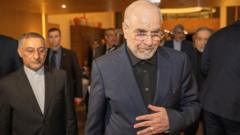
Trump and Iran Negotiator Trade Sharp Warnings in Swiss Peace Talks
President Donald Trump and Iran's lead negotiator Mohammad Bagher Ghalibaf have exchanged heated warnings as the first round of direct peace talks commenced in Switzerland. These negotiations follow a preliminary agreement intended to conclude the ongoing conflict, though rising tensions in Lebanon threaten to derail the progress.
Background / Context
The current diplomatic efforts follow an initial agreement signed by US and Iranian leaders last week, which aimed to halt hostilities across all fronts and reopen the strategic Strait of Hormuz. The agreement was intended to end a war that has resulted in thousands of casualties and significant economic disruption, particularly through the blockade of vital shipping lanes.
Despite the formal commencement of these talks at the Bürgenstock resort, the situation on the ground remains volatile. Ongoing skirmishes between the Israeli military and Hezbollah in southern Lebanon continue to escalate, leading to significant loss of life. These developments have complicated the diplomatic landscape, forcing the US to declare new ceasefire attempts while negotiators attempt to finalize a permanent deal within the 60-day window established by the initial framework.
Key Developments
- President Donald Trump explicitly threatened to attack Iran if the nation does not act to restrain Hezbollah from continued provocations in Lebanon.
- Lead negotiator Mohammad Bagher Ghalibaf dismissed the US threat, asserting that Iran's armed forces remain prepared for potential confrontation and that foreign threats lack efficacy.
- Vice-President JD Vance, leading the US delegation, urged a new chapter in bilateral relations, provided Iran commits to ending regional instability and renounces nuclear ambitions.
- Despite Iran's claims of closing the Strait of Hormuz, maritime tracking data confirms that commercial vessels and oil tankers continue to transit the channel.
- The initial agreement includes a $300 billion reconstruction plan for Iran and the termination of existing economic sanctions, provided a final comprehensive deal is reached.
Analysis
The dual nature of these negotiations—diplomatic discourse in Switzerland versus continued military engagement in the field—underscores the fragility of the peace process. While the US government is offering a path toward economic reconstruction and the lifting of sanctions, the persistence of the Hezbollah-Israel conflict forces the Trump administration to maintain a posture of military readiness. Iran is similarly navigating a complex path, attempting to secure the promised economic relief while projecting internal strength to maintain its domestic credibility.
Furthermore, the involvement of regional mediators, including Pakistan and Qatar, highlights the international pressure to stabilize the region. However, the disconnect between official rhetoric and the ongoing military operations in southern Lebanon suggests that the path to a final 60-day agreement will be heavily dependent on whether Tehran can exert sufficient influence over its proxies to satisfy Washington's security requirements.
What This Means
The future of the US-Iran relationship hinges on the success of these ongoing negotiations. If the current talks in Lucerne lead to a sustainable de-escalation in Lebanon and a verifiable commitment regarding nuclear ambitions, it could fundamentally reshape the Middle East security architecture. Conversely, a failure to address proxy activities or regional insecurity could lead to a rapid resumption of wider hostilities.
Conclusion
While the commencement of talks marks a significant step toward peace, the continued violence on the ground remains a critical barrier to progress. The success of this diplomatic initiative will ultimately depend on whether both parties can bridge the gap between their public posturing and the complex reality of regional conflicts.