
Israel and Hezbollah agree ceasefire amid ongoing regional instability
Israel and Hezbollah Agree Ceasefire Amid Ongoing Regional Instability
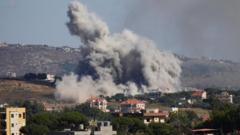
Israel and Hezbollah have officially agreed to a ceasefire, according to reports from United States officials, following a night of heavy bombardment in southern Lebanon. Despite the announcement, both sides continue to report ongoing military actions, leaving the durability of the agreement in serious doubt.
Background / Context
The ceasefire comes after a period of intense escalation that saw Israeli air strikes in Lebanon result in the deaths of 47 people, including women and children. The conflict has been marked by repeated breaches of regional understandings, as Hezbollah engaged in a tactical ambush resulting in the deaths of four Israeli soldiers, including a battalion commander.
The broader context of this violence is tied to a fragile memorandum of understanding between the United States and Iran, which intended to de-escalate regional wars. However, the ground reality reflects a breakdown in these diplomatic efforts, with Tehran accusing the administration of Donald Trump of failing to curb Israeli military aggression in southern Lebanon.
Key Developments
- Israel and Hezbollah formally reached a ceasefire agreement as announced by U.S. officials.
- Lebanon reported 47 deaths resulting from recent Israeli air strikes, with 97 people wounded.
- Hezbollah successfully ambushed Israeli forces, killing four soldiers and destroying three tanks using guided missiles.
- U.S. State Department officials confirmed that direct talks between Israel and the Lebanese government are scheduled to resume in Washington next week to discuss a permanent peace.
- Despite the ceasefire, the Israeli military stated it would continue to address immediate security threats.
Analysis
The ceasefire appears to be struggling against a tide of hardline rhetoric and persistent military engagement. Israel's National Security Minister Itamar Ben Gvir has publicly rejected the notion of restraint, suggesting that the scale of damage in Lebanon should match the losses suffered by the Israeli military. This sentiment is echoed by Iranian officials, who have warned that any violation of the memorandum will be viewed as a direct failure of the United States to manage its regional ally.
Furthermore, the domestic pressures on Prime Minister Benjamin Netanyahu remain significant. Military leadership continues to emphasize that despite political agreements, the protection of civilians and the neutralization of Hezbollah's infrastructure take precedence. This creates a cycle where both sides feel compelled to act regardless of high-level diplomatic commitments.
What This Means
The ongoing instability poses a critical test for the foreign policy objectives of the Trump administration. If the U.S. cannot enforce the terms of its deal with Iran, the likelihood of a wider, more protracted conflict increases, potentially undermining the entire regional framework established by the memorandum.
Local populations in Lebanon remain deeply skeptical, with displaced residents expressing little faith in the longevity of this latest agreement. As communities in the south lie in ruins and the death toll continues to rise, the path toward a lasting peace remains obstructed by deep-seated distrust and active hostility.
Conclusion
The ceasefire represents a fragile attempt to halt a devastating cycle of violence between Israel and Hezbollah. Whether these diplomatic efforts can withstand the pressures of local military commanders and political hardliners remains to be seen.