
Drowning deaths soar in France as Europe buckles in peak of heatwave
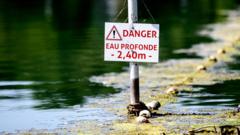
Deadly Heatwave Triggers Swimming Warnings Across Europe
As temperatures climb to record-breaking highs, France has reported forty drowning deaths linked to the ongoing European heatwave. Authorities are issuing urgent warnings as residents struggle to cope with life-threatening conditions that have gripped the continent.
Background / Context
The current heatwave has sent temperatures soaring across Western Europe, with France reaching its hottest June day on record at an average of 29.8C. Météo France has placed over half of the country on red alert, noting that nights have also reached unprecedented warmth with an average low of 21.6C. The situation is not limited to France, as neighboring nations are also experiencing extreme weather conditions that place immense pressure on infrastructure and health services.
Spain is experiencing its third day of a national heatwave, with state weather service Aemet reporting that June heatwaves are becoming increasingly common due to the impacts of climate change. Meanwhile, Italy has declared a red heatwave alert across 15 major cities, including Rome and Milan, signaling severe health risks for all citizens. Experts from the Copernicus climate service indicate that Europe is the fastest-warming continent, heating up at twice the global average rate.
Key Developments
- Forty drowning deaths have been recorded in France since last Thursday as people seek relief in unsupervised rivers and reservoirs.
- Prime Minister Sébastien Lecornu and Sports Minister Marina Ferrari have urged the public to avoid swimming in dangerous, unsupervised locations.
- A nuclear power plant in Golfech, France, was forced to shut down because the water in the River Garonne, used for cooling, exceeded the legal temperature limit.
- The Eiffel Tower and the Louvre museum have both announced reduced operating hours to mitigate risks for visitors and staff during the intense heat.
- Emergency labor protections have been revived in Italy to support construction and farm workers, allowing companies to access state-backed furlough support.
- Meteorologists report temperatures exceeding 40C in several Spanish regions, with expectations for the heat to peak in the Netherlands, Belgium, and Germany by Friday.
Analysis
The frequency and intensity of these heat events underscore the accelerating impact of climate change on European geography. Historical data from Aemet reveals a stark trend: between 2000 and 2025, mainland Spain recorded ten heatwaves, compared to only two in the preceding 25 years. This transition is not merely statistical; it is reshaping daily life, travel, and industrial operations across the continent as societies scramble to adapt to "exceptionally high heat" warnings.
Furthermore, the tragic loss of life highlights a disconnect between the public urge to cool off and the genuine dangers of natural water bodies. When infrastructure fails—such as the thermal limits on cooling systems at power plants or the vulnerability of rail tracks to buckling—it becomes clear that European urban planning and environmental safeguards were not designed for these peak temperatures. The necessity for integrated heat management policies has never been more pressing.
What This Means
For citizens, this means a fundamental shift in how summer months are navigated, with a greater reliance on telecommuting and avoiding peak sun hours. National governments are increasingly forced to activate emergency heat plans that prioritize the health of the elderly and vulnerable while providing economic relief to industries that must halt operations to protect staff.
Looking ahead, the strain on water supplies and the potential for increased wildfire activity pose long-term economic and environmental threats. Policymakers must now balance immediate crisis management with the arduous task of retrofitting historic cities that are inherently ill-equipped for the climate trajectories seen in mid-2026.
Conclusion
As Europe faces these extreme temperatures, the combined pressure on infrastructure and public safety serves as a critical warning for the coming summer seasons. Authorities continue to stress that public vigilance and adherence to health warnings remain the most effective tools against this escalating climate crisis.