
NASA's SPHEREx Maps Interstellar Ice in Milky Way
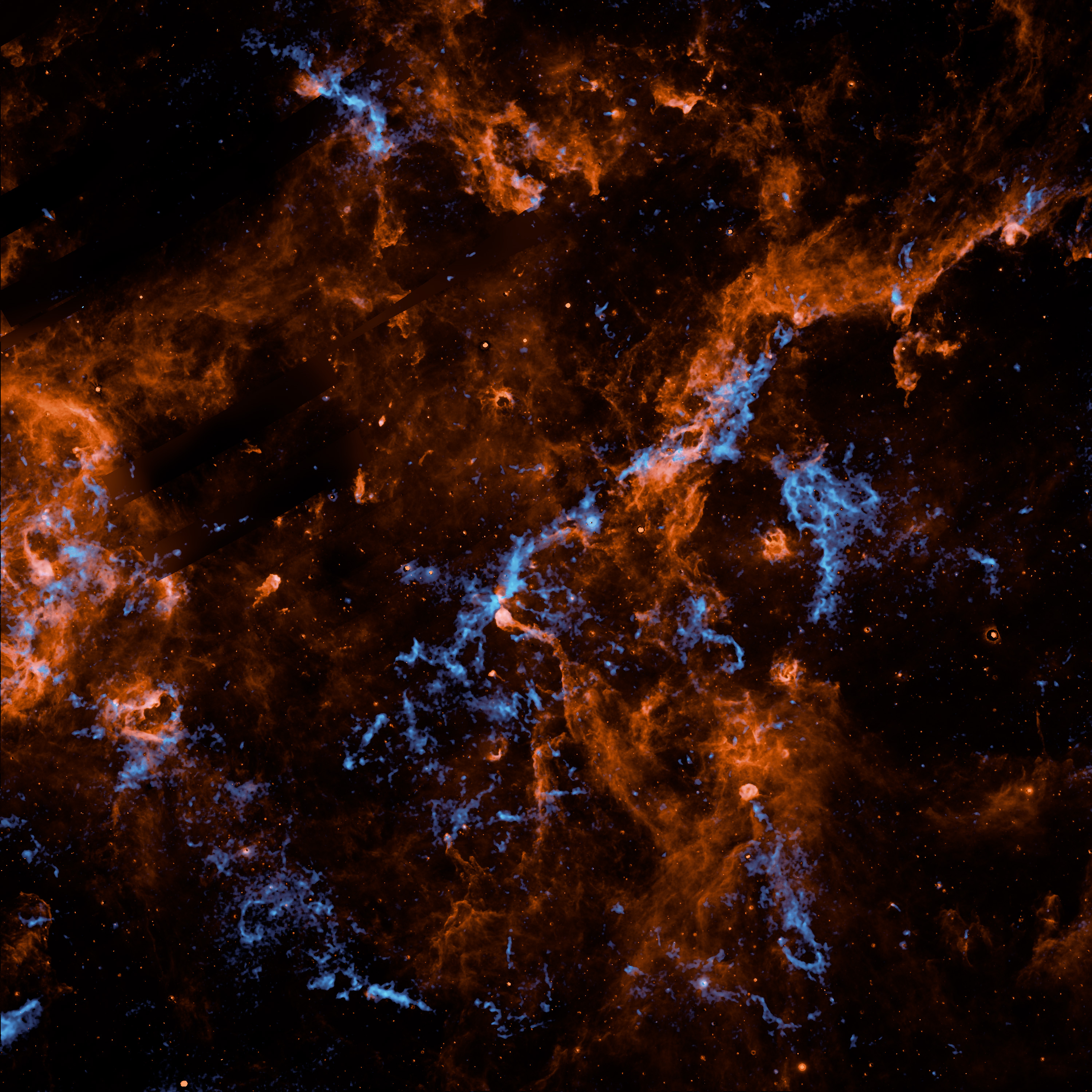
NASA's SPHEREx Mission Discovers Vast Frozen Complexes in the Milky Way Galaxy
Background / Context
NASA’s SPHEREx (Surveying for HPeSSs with R.Exoplanet) mission, a space telescope launched in 2021 by NASA, has provided unprecedented data on interstellar ice and gas. The mission primarily focuses on studying exoplanets but also includes observations of nearby galaxies.
Key Developments
- SPHEREx mapped vast frozen complexes in the Cygnus X star-forming region of the Milky Way galaxy.
- Chemical signatures are shown as bright blue structures for water ice, while orange represents polycyclic aromatic hydrocarbons (PAHs).
- This is the first detailed study on interstellar ices in our galaxy using this advanced telescope.
Analysis
The discovery underscores the importance of SPHEREx in understanding not just exoplanets but also the broader astrophysical environment, including the potential for life-supporting conditions beyond Earth. The presence of water ice and PAHs suggests a rich molecular environment that could harbor complex organic compounds essential to biological systems.
What This Means
Scientists can now use SPHEREx’s data to better understand the origins of life in our galaxy. Furthermore, this study could lead to new insights into interstellar travel and the habitability of distant planets.